One Per Day
An Endorsement of Clarice Lispector's "Selected Crônicas"

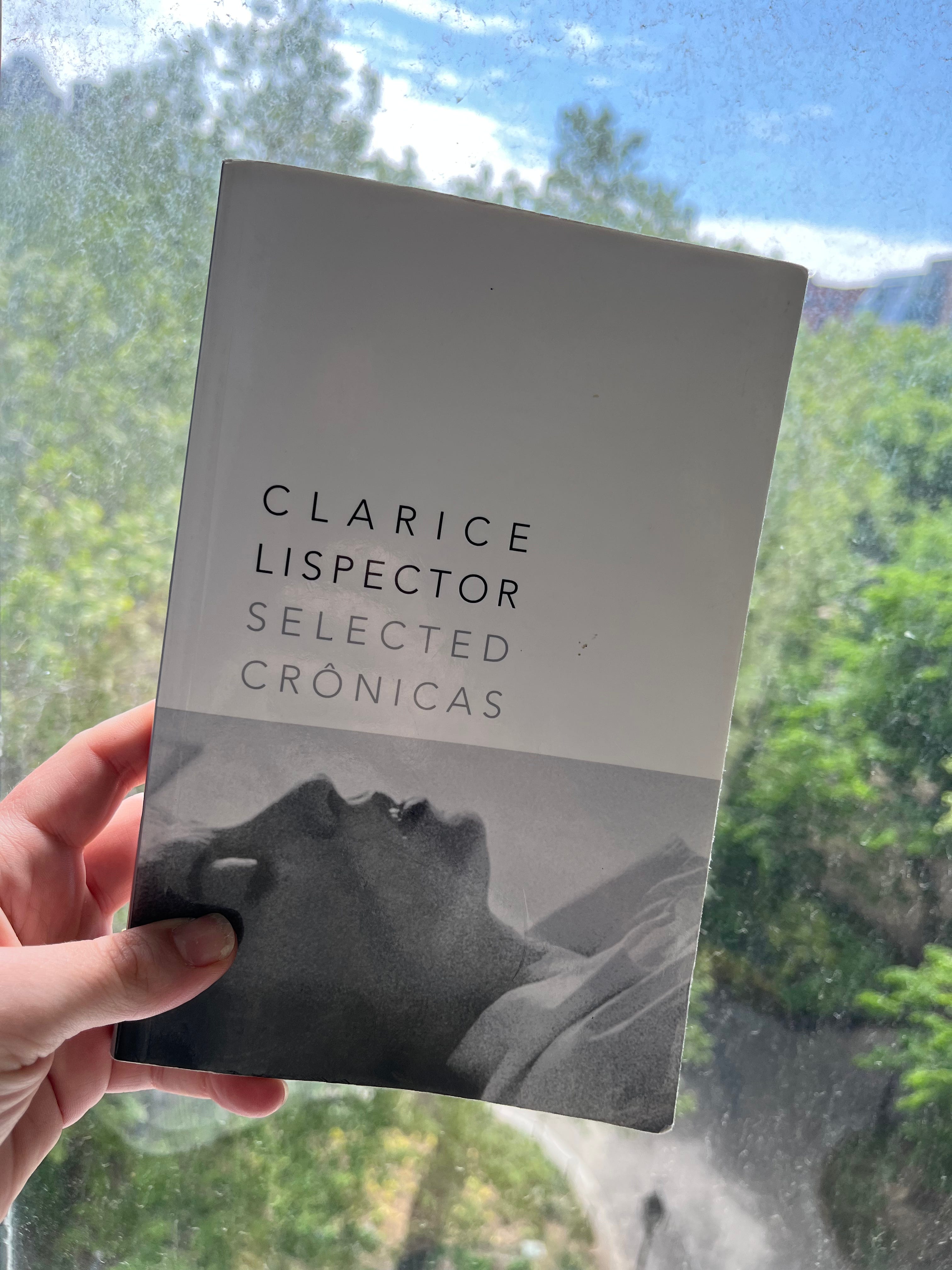
I was at 192 Books, which I highly recommend for anyone who loves the experience of browsing for books while feeling like you have just barged into someone’s private home and interrupted them in the middle of an extremely pressing matter to ask an inane and inessential question. The sellers do not have time for you or your lack of cultivation, but the curation is, to use a term I think they would appreciate there, sans pareil.
Without any help and by some sort of felicitous accident, I grabbed this book from the top of a pile whose organizational principle eludes me. I had of course heard of Clarice Lispector because I was a young woman, interested in interrogating the experience of being a young woman, pursuing a humanities degree in graduate school. We are a small but loud group, and we like Clarice. Like her American contemporaries Renata Adler and Joan Didion, Lispector is cruelly precise in her writing, beautiful in her visage, and fastidiously elegant in her comportment. On the cover of this very edition her lip liner is sharp enough to slay her enemies.


Upon discovery, I had never, and to this day still have not, read Lispector’s much-better-known fiction writing: The Passion According to G.H., The Hour of the Star, Near to the Wild Heart, though I’m confident at one time I claimed to have loved all of those books. Since I read because I love sentences, I tend to read short-form nonfiction. Plot often gets in the way of my noticing the sentences, especially if too much is going on. I do not want anything to actually happen besides a thinker with an extremely specific sensibility and sensitivity to aesthetic experience putting words in a pleasing, unexpected order.
For me, then, the crônica is a perfect genre: compressed in length and capacious in topic, crônicas are unique to Brazilian newspapers, comparable to the pensée or perhaps a New Yorker Talk of the Town piece. Plus, they are published as nonfiction, but can often include composite characters, invented dialogues, and surreal turns. As I am very occasionally given to hyperbole or editorializing for nothing less noble than narrative cohesion and addressee’s enjoyment, I appreciate the genre fluidity.
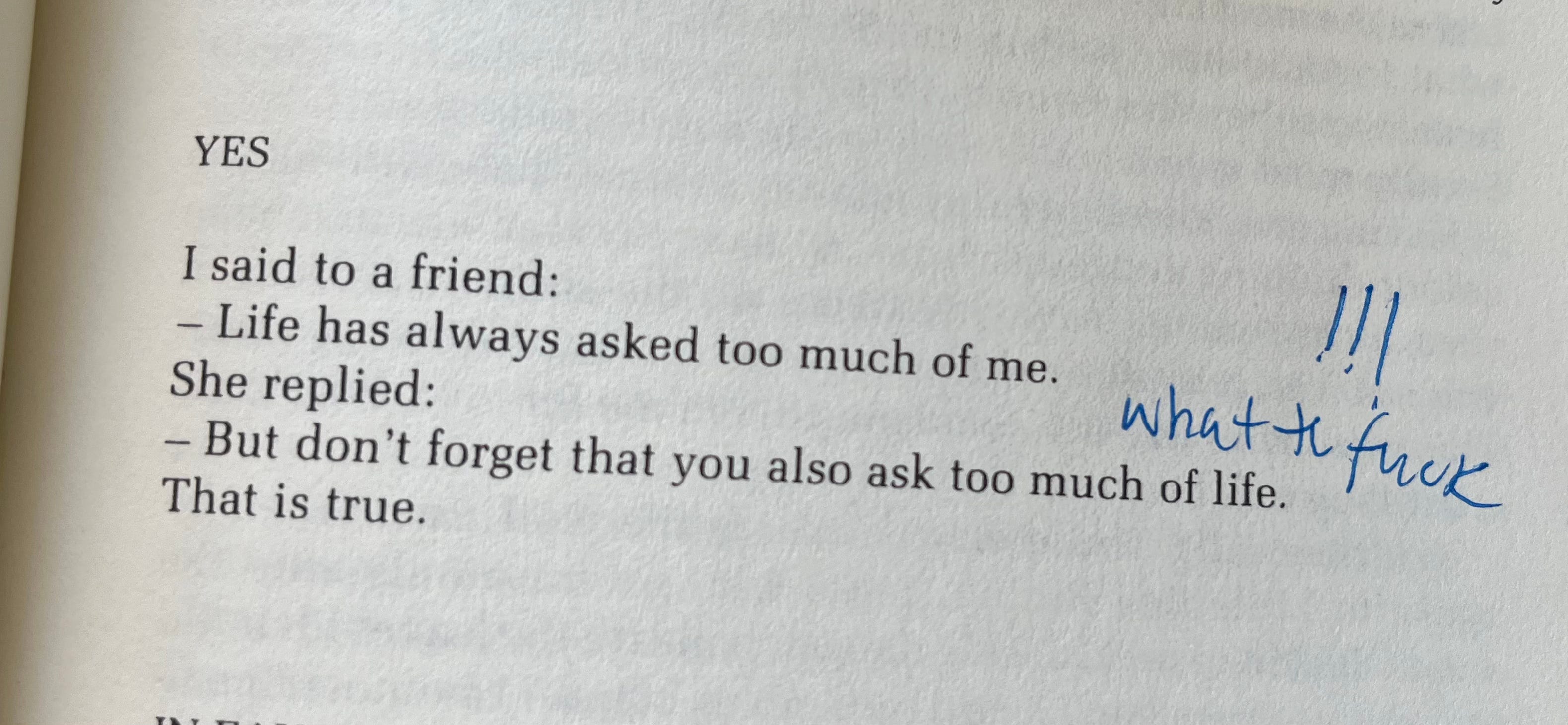
This text is arranged chronologically by year and then by calendar date from when the pieces ran. What a pleasure to sync one’s reading with Lispector’s writing across half a century. Wherever you are, tomorrow is May 9. Here is what Clarice Lispector was thinking about writing on May 9, 1970. From the opening of Inspiration:
Ample bosom, broad hips, eyes chaste, brown, and dreamy. Now and then she would cry out suddenly. Speaking so quickly she could barely be heard, she confided cheerfully with an air of impatience:
‘I thought that I could never be a writer, I have so…so…little to say.’1
I won’t give away the rest except to say that if you think about writing, talk about writing, and plan for writing more than you write, this is for you. (Note my last post’s publication date; this is undoubtedly for me). You’ll simply have to trust that it is a coincidence that the above physical description (excepting the “amble bosom” and TBD on the “chaste” eyes), manner of speech (too fast to be understood), and thematic concerns (will I be a writer?) portray a person suspiciously similar to… me. While I, of course, love any representation of wide-hipped, loquacious brunettes in literature, many of these pieces will please a less self-centered reader, perhaps one inclined to muse upon the days of the week. Here is Sunday, in full. From 1969:
Such perfume! It is Sunday morning. The terrace has been swept. So he switches on the radio. A late lunch gives one thoughts. He smiles, and gives those thoughts form. There is water on the table but no one is thirsty on a Sunday. And he begins sipping wine without much enthusiasm. At four o’clock they will hoist the flag on the pavilion. (But what he really fears are those tranquil Sunday evenings).
Do you not shudder in embarrassed horror at the paucity of imagination and pedestrian alliteration in the phrase “Sunday Scaries” after reading that? Do you not fear the arrival of this Sunday’s approaching tranquil evening?
Unlike Clarice Lispector’s crônicas, I have gone on too long. Read these. Perhaps one at a time. Replace your Morning Pages or daily astrology app2 with missives from the 20th century. Watch your day unfold alongside hers. Revel in the precise diction; marvel at the passage of time. Have notions only a stoned 15-year-old would dare articulate: things are the same as the past, but they are also different.
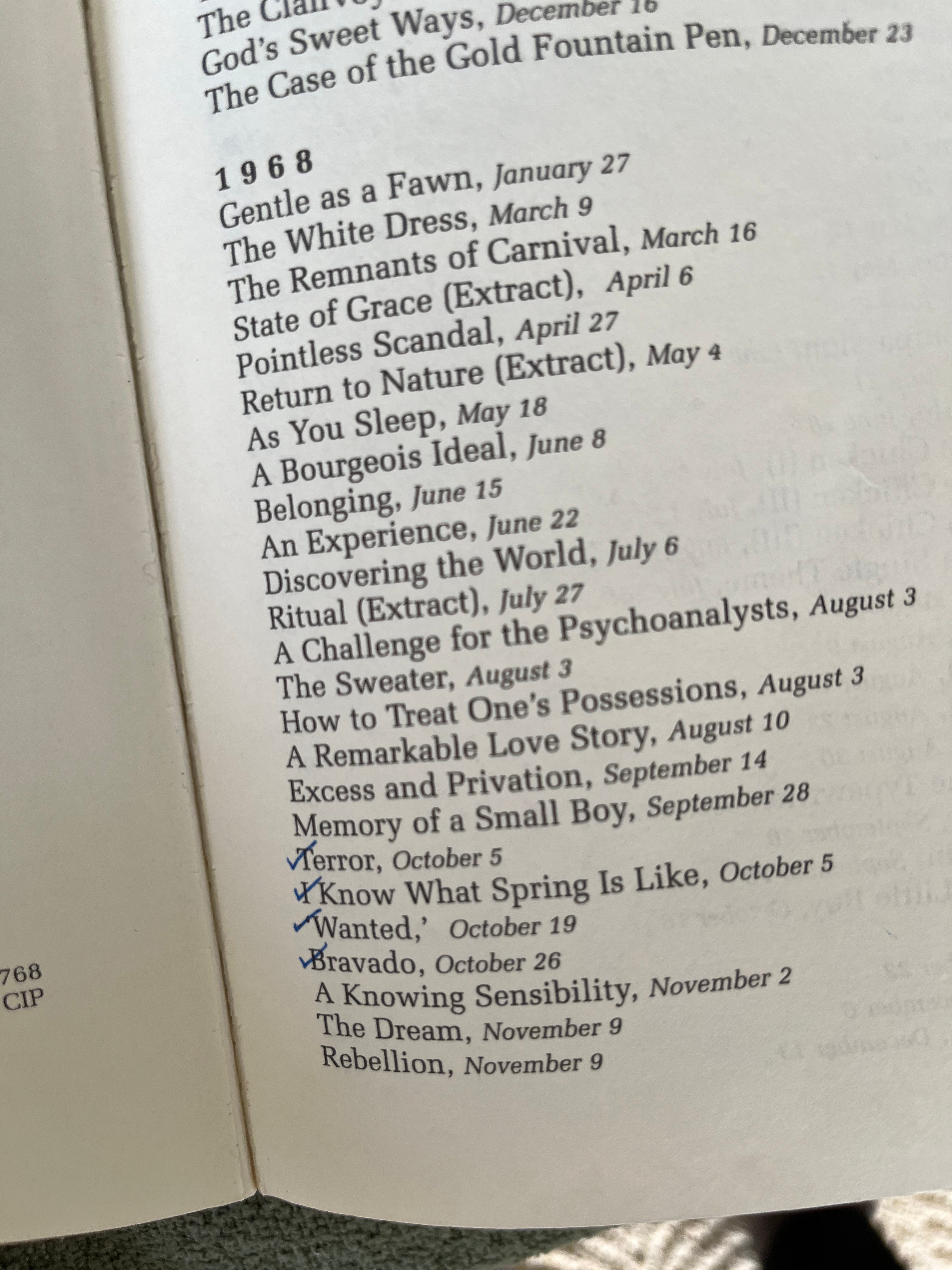
This quotation only sort of evinces what I just called Lispector’s cruelty. The tone is warm and self-deprecating. To me, the cruelty lies in how succinctly she reveals our (maybe in this case I specifically mean my) hypocrisies and delusions. Being confronted with the ways in which we lie to ourselves and justify it feels cruel, like she’s seeing right through you and declining to afford you any pity. Of course, that’s also sort of a favor.
The rage these two practices inspire in me is, as of this writing, unexplored. Perhaps it’s misogyny. Perhaps employing astrology as a way to understand and explain complex human behaviors is genuinely annoying.
She’s been on my list for a while, I gotta tap in.
I don’t know if I’ve heard of someone who reads for the love of sentences over the love of plot but I respect it!